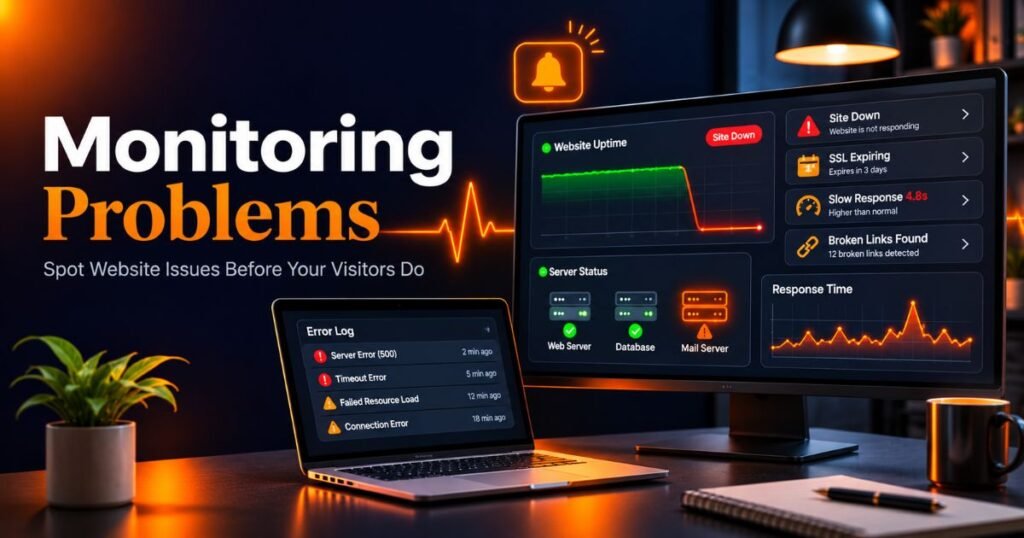



Something on the site breaks, a plugin update causes a layout shift, or rankings quietly slide. The instinct is the same: hire a wordpress consultant. Sometimes that is the right call. Other times the site doesn’t need a new person on retainer — it needs a system that catches problems before they turn into a support ticket.
Here is how to tell which situation you’re actually in, and what each path realistically costs.
What a WordPress Consultant Actually Fixes
A good consultant earns their rate on problems that need judgment, not just uptime. That includes a messy plugin stack causing conflicts, a theme that needs rebuilding, a migration that has to go right the first time, or a security incident that needs someone who has handled one before. A wordpress website developer or a wordpress development company is the right call when the work is structural. Think new functionality, a redesign, or untangling years of accumulated plugins and custom code.
Where consultants add less value is ongoing, repetitive checking: did the site go down last night, did a plugin update break the checkout form, is the SEO score drifting. That’s not a judgment problem. It’s a monitoring problem, and paying a consultant’s hourly rate to manually check for it is expensive compared to a tool that checks automatically.
Signs You Need a Consultant, Not a Monitoring Tool
- The site needs new functionality. A booking system, a membership area, a custom integration — this is build work, not monitoring.
- Something is already broken and you don’t know why. A wordpress designer or developer who can read error logs and plugin conflicts will solve this faster than any dashboard.
- You’re migrating hosts, themes, or platforms. This is a one-time project with real risk, which is exactly what consulting is for.
- Rankings dropped and you don’t know if it’s technical or content-related. A wordpress seo consultant or wordpress seo expert can diagnose whether it’s a crawl issue, a penalty, or just competitors outranking you.
Signs You Need Monitoring, Not a Consultant
- You want to know the moment the site goes down, not the next time someone happens to check it.
- You’re paying someone monthly just to “keep an eye on things.” That’s a recurring cost for work a tool does continuously and more reliably.
- The site is stable and just needs watching — uptime, broken links, SEO score drift, and plugin update failures are exactly what monitoring tools are built to catch.
- You’ve had the same type of incident twice. If it keeps happening, you don’t need another one-off fix — you need something watching for it continuously.
The Honest Middle Ground: Most Agencies Need Both
In practice, the choice isn’t really consultant versus monitoring — it’s knowing which one to reach for and when. A freelance seo consultant or developer handles the project work: the redesign, the migration, the technical SEO cleanup. Monitoring handles everything in between projects, so the next incident gets caught in minutes instead of discovered by a client three days later.
Agencies that skip monitoring tend to over-hire consultants for problems a dashboard would have caught for free. Agencies that skip consultants tend to let structural problems pile up because no tool can tell you a site’s information architecture is a mess — that still takes a human look.
What to Ask Before Hiring a WordPress Consultant
Before paying for wordpress website design services or ongoing consulting, ask whether the problem is a one-time fix or a recurring pattern. If it’s recurring, a consultant can patch it once, but it will likely resurface unless something is actually watching for it afterward. The cheapest long-term fix is often: fix it once with a consultant, then put monitoring in place so you don’t pay to fix the same thing twice.
Frequently Asked Questions
How much does a WordPress consultant typically cost?
Rates vary widely by scope and experience, from project-based fees for a single fix to monthly retainers for ongoing work. Get a clear scope before committing, since open-ended “keep it running” retainers are often better replaced by monitoring plus occasional project work.
Can monitoring replace a WordPress consultant entirely?
No. Monitoring tells you something is wrong; it doesn’t rebuild a theme or resolve a complex plugin conflict. Think of monitoring as the early-warning system and a consultant as the person who responds to what it finds.
What’s the first thing to fix if I can only do one?
If the site has no monitoring at all, start there — it’s inexpensive and immediately reduces the number of surprises. If the site has monitoring but a known structural issue, bring in a consultant for that specific fix.
Whichever you need first, the goal is the same: fewer surprises and less time spent manually checking things a system could watch for you. PulseWMS combines uptime, performance, and SEO monitoring in one dashboard, so the recurring checking gets handled automatically between projects. For more on evaluating WordPress help, WPMU DEV’s guide to hiring WordPress developers is a useful read.