

Most site owners try to fix their own rankings before they call anyone. It usually starts with a free checker, a few blog posts, and a weekend of tweaking meta tags. Then three months pass and nothing moves. That gap is exactly where a proper SEO audit service earns its fee — it finds the issues a DIY pass simply cannot see.
This isn’t about DIY being lazy. It’s about scope. A single person checking their own site is working from a handful of tools and a limited view of how search engines actually crawl and score a page. A dedicated audit service runs dozens of checks at once, cross-references them, and tells you which ones are actually costing you traffic.
What an SEO Audit Service Actually Checks
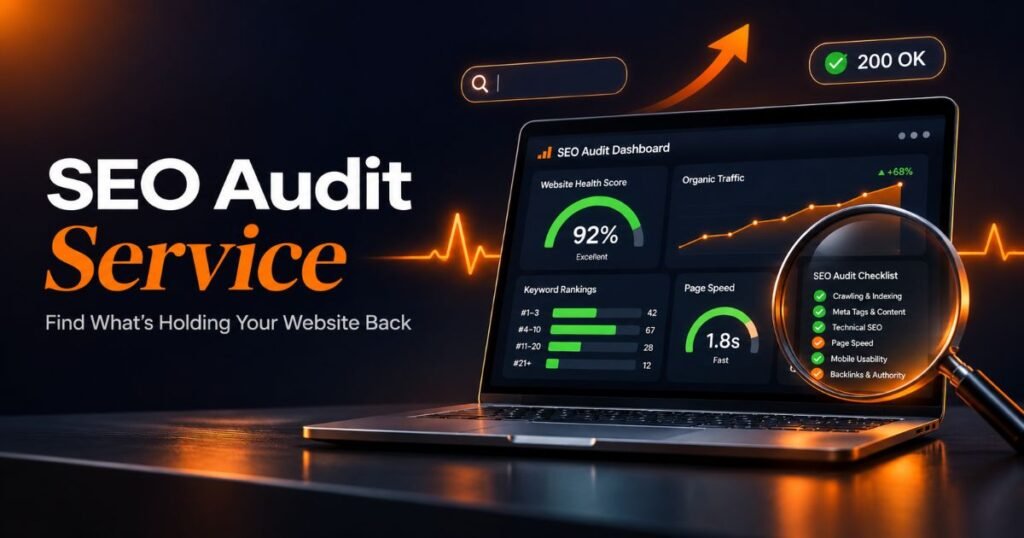
A proper technical SEO audit goes well beyond “is my title tag the right length.” It typically covers:
- Crawlability and indexation — are your important pages even reachable by Googlebot?
- Site architecture and internal linking — do your best pages get enough link equity?
- Core Web Vitals and page speed — is slow loading quietly suppressing rankings?
- Structured data and schema markup — can search engines (and AI engines) understand your content?
- Backlink profile health — are toxic links dragging your authority down?
- Content gaps versus competitors — where are you simply missing from the conversation?
Agencies that offer seo audit services as a standalone product usually run this as a structured checklist, not a one-off glance. That consistency is what catches problems a busy site owner would miss on their third pass through the same five pages.
Where DIY SEO Audits Usually Fall Short
Free tools are genuinely useful for a quick gut-check. They are not built to replace a full technical seo audit service. Here’s where they typically break down:
- Surface-level checks only. Most free tools flag obvious issues (missing meta descriptions, broken links) but miss deeper problems like crawl budget waste or duplicate content clusters.
- No prioritization. A DIY audit often produces a long list of “issues” with no sense of which five actually matter this month.
- Blind spots around AI search. Most checklists written a few years ago never account for how AI Overviews, ChatGPT, or Gemini read a site — a gap that’s only growing.
- No second opinion. It’s hard to audit your own site objectively when you already know what you meant to build.
The Real Cost of Skipping a Professional SEO Audit
Skipping an audit doesn’t save money — it just delays the bill. Sites that go a year or more without a proper audit tend to accumulate the same problems: orphaned pages with no internal links, duplicate or thin content, and crawl errors that quietly pile up until organic traffic stalls.
By the time it’s obvious something is wrong, the fix is usually bigger and slower than it would have been if a seo consulting services team had caught it three months earlier. A $75,000-per-year site that loses even 15% of its organic traffic to an unnoticed indexing problem is losing far more than any audit would have cost.
Technical SEO Audit vs. General SEO Audit — What’s the Difference?
Not every audit is the same. A general SEO audit usually looks at keywords, content, and on-page basics. A technical seo audit service goes one level deeper — into crawl logs, rendering, site speed, and structured data — the parts of SEO that a content checklist alone will never catch. Most agencies benefit from both, but if traffic has been flat despite regular content publishing, the technical side is usually where the real answer is hiding.
What to Look for in an SEO Audit Service
Not all on page seo services and audit providers are equal. Before hiring one, check that they:
- Provide a written, prioritized action plan — not just a raw data dump
- Explain findings in plain language your team can actually act on
- Cover AI search visibility (GEO/AEO), not just classic Google rankings
- Offer ongoing monitoring, not a one-time snapshot that goes stale in a month
That last point matters more than most buyers realize. An audit is a snapshot in time. Search engines, competitors, and your own site keep changing after the report is delivered — which is why pairing an audit with ongoing monitoring tends to protect the gains instead of letting them erode.
Frequently Asked Questions
How much does an SEO audit service cost?
Pricing varies widely by site size and depth, but most professional technical audits range from a few hundred to a few thousand dollars, depending on how many pages and how many issue categories are in scope.
How long does a technical SEO audit take?
A thorough audit for a small-to-mid-size site typically takes one to two weeks, including crawling, analysis, and writing up a prioritized action plan.
Can I just use a free SEO audit tool instead?
Free tools are a reasonable first pass for obvious issues, but they can’t prioritize findings for your specific business or catch deeper technical and AI-visibility problems the way a dedicated audit service can.
If your traffic has been flat for more than a quarter, that’s usually the signal to stop guessing and get a proper audit. PulseWMS runs ongoing technical SEO, uptime, and AI-visibility monitoring in one place, so the issues an audit finds don’t just quietly come back next month. For a deeper look at how Google evaluates technical health, Google’s own SEO Starter Guide is a solid reference point.