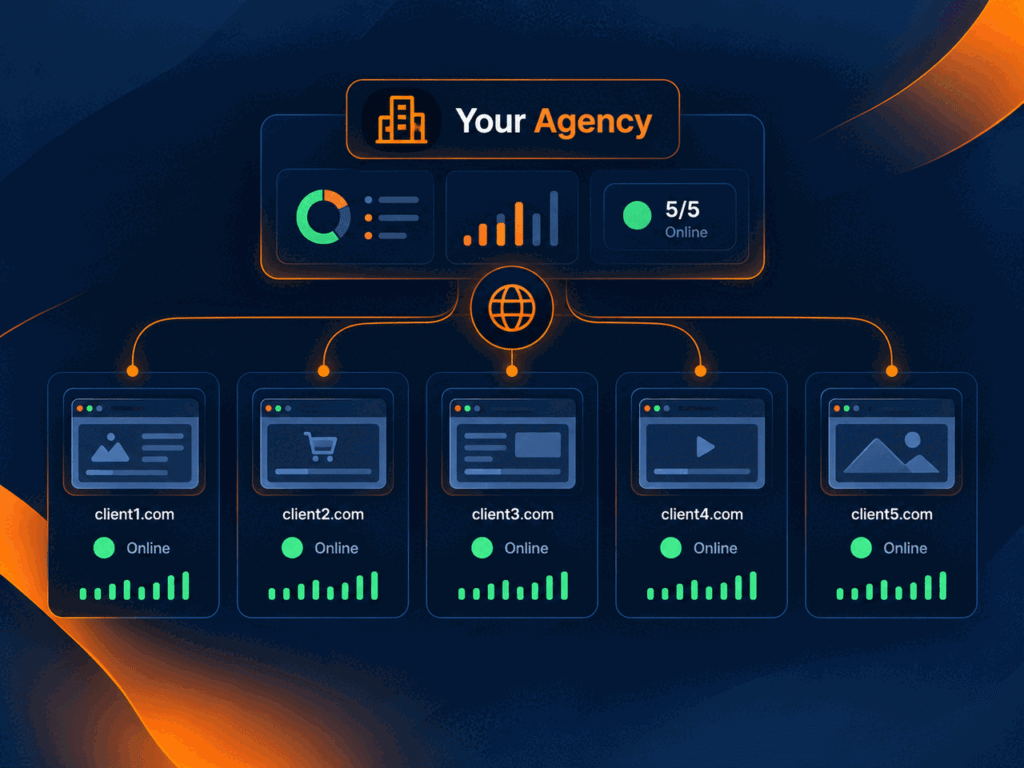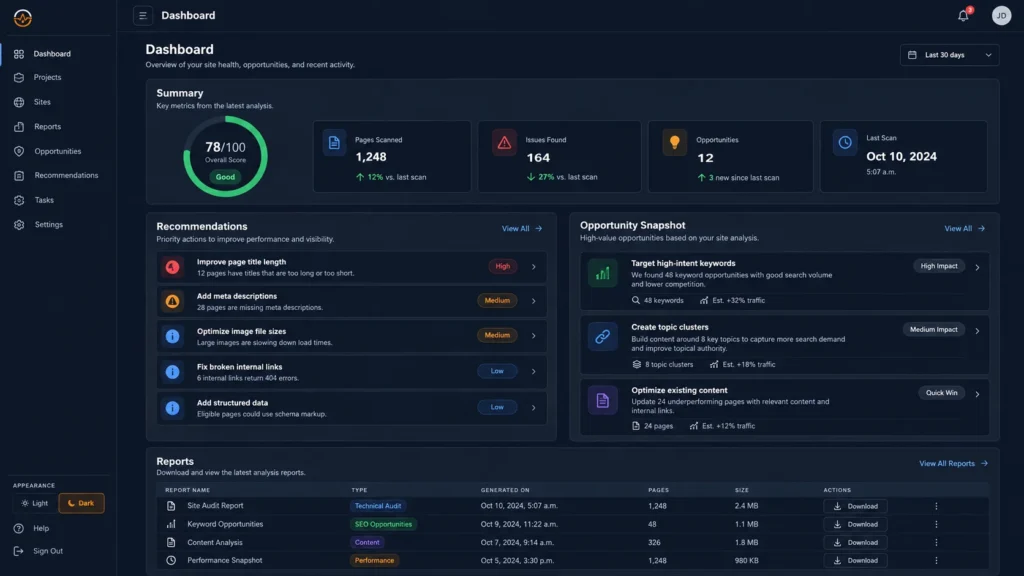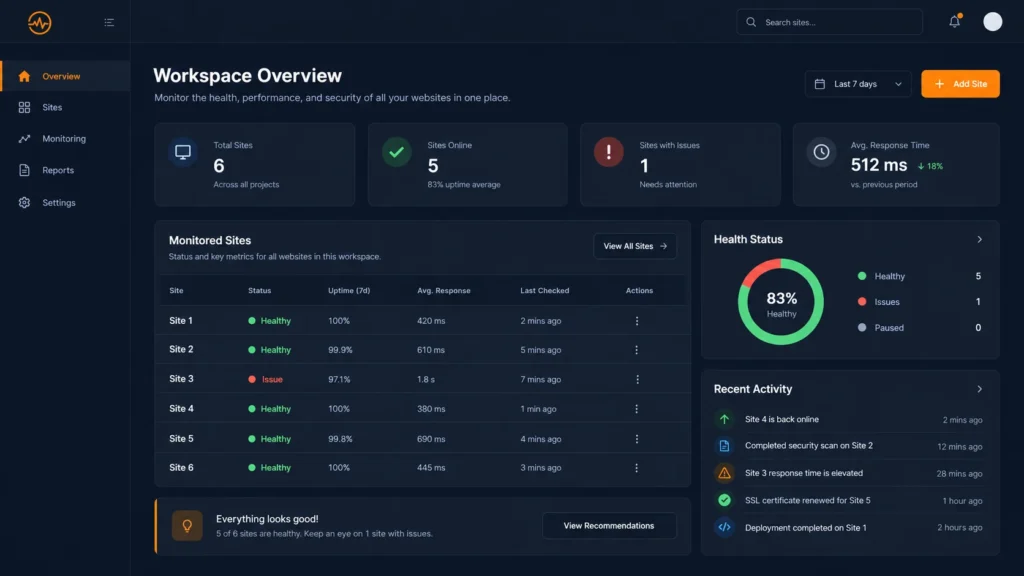


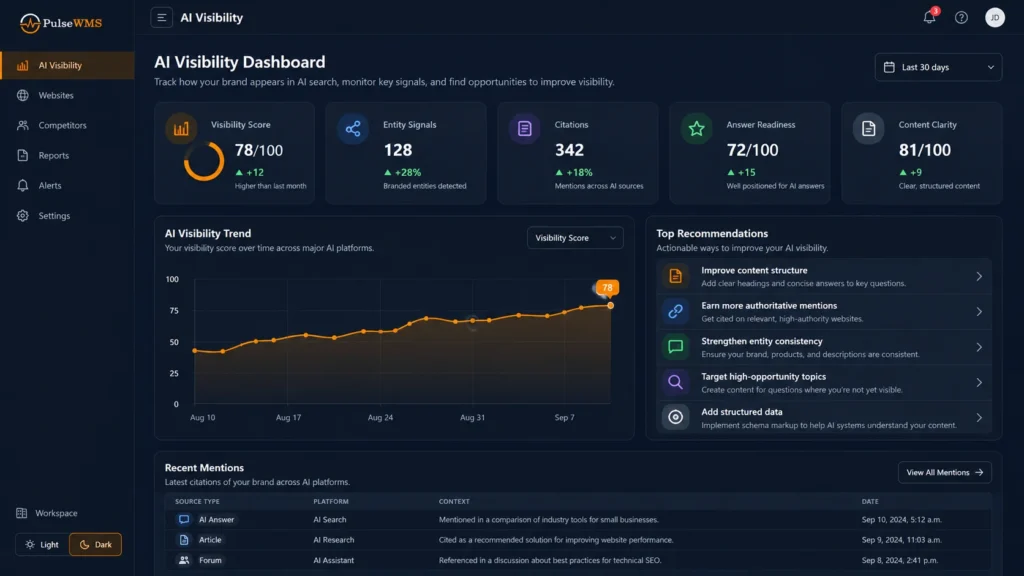
AI search is changing how people discover brands, products, services, and answers, but the fundamentals are still familiar: content needs to be accessible, understandable, trustworthy, and useful. Agencies that already manage technical SEO and website operations are well positioned to add AI-search readiness to their recurring client workflows.
This AI search readiness checklist is designed for agencies that want a practical way to review client websites for AI visibility without promising guaranteed citations or rankings. Use it alongside technical SEO, content quality, brand authority, and ongoing website monitoring.
Quick AI search readiness checklist
- ✅ Make important pages crawlable and indexable.
- 🧭 Keep canonical URLs, redirects, and sitemaps consistent.
- 🧩 Make each page’s topic, entity, and purpose clear.
- 📝 Answer important questions directly and completely.
- 📚 Publish original first-party evidence and useful expertise.
- 🔗 Build strong internal links between related topics.
- 🏷️ Use accurate structured data where it fits the content.
- 🏢 Keep organization, product, and brand information consistent.
- 🔎 Strengthen author, source, and factual credibility.
- 📈 Maintain useful pages instead of mass-producing thin content.
- ⚡ Keep pages fast, mobile-friendly, and accessible.
- 🤖 Monitor AI mentions, citations, and referral traffic where observable.
- 🔁 Recheck visibility after meaningful content or technical changes.
1. Start with crawlability and indexability
AI-search readiness begins with a technically accessible website. Important public pages should load successfully, be available to search crawlers, and avoid accidental noindex directives or authentication barriers.
Review robots.txt, meta robots directives, canonical tags, redirects, and response codes. A strong content strategy cannot compensate for pages that search systems cannot reliably discover or process. The technical SEO checklist for agencies is a useful companion for this foundation.
2. Keep the preferred URL signals consistent
Duplicate or conflicting URL signals make it harder for systems to understand which page represents the primary version of a topic. Align canonical tags, internal links, redirects, and XML sitemaps around the preferred URLs.
This is especially important after redesigns, migrations, CMS changes, and campaign launches, where stale URLs can remain discoverable for months.
3. Make the entity and topic of each page obvious
Every important page should make it clear who the organization is, what the page is about, and what the user can do next. Avoid vague introductions that require several paragraphs before the core subject becomes clear.
Use descriptive titles, headings, concise introductions, relevant supporting details, and consistent naming for products, services, locations, people, and organizations.
4. Answer real questions directly
Pages are more useful when they provide clear answers instead of forcing readers through promotional filler. For important client topics, identify the questions prospects actually ask and answer them in natural language.
Direct answers can appear in paragraphs, checklists, comparison sections, definitions, FAQs, tables, or step-by-step explanations. The format should match the question rather than being added only for search engines.
5. Publish original first-party evidence
Generic summaries are easy to reproduce. Stronger content includes information that comes from the business itself: product workflows, original screenshots, internal data, experiments, examples, checklists, methodology, benchmarks, customer-safe case observations, or expert commentary.
Agencies should look for opportunities to turn recurring client work into useful first-party resources while respecting confidentiality. This makes the content more differentiated and gives readers a reason to reference the original source.
6. Build topical connections with internal links
Internal links help users and search systems understand how related pages fit together. Important commercial pages should receive contextual links from relevant guides, checklists, comparisons, and supporting resources.
For example, an agency can connect website monitoring, technical SEO monitoring, and AI visibility monitoring so the website operations story is clear across the site.
7. Use structured data accurately
Structured data can help machines interpret content, but it should describe what is actually visible on the page. Use organization, article, breadcrumb, software, product, FAQ, or other relevant schema only when the page genuinely meets the requirements.
Avoid adding large amounts of markup simply because a plugin makes it available. Consistency and accuracy are more useful than volume.
8. Keep brand and organization information consistent
Business names, product names, descriptions, contact details, logos, and official URLs should be consistent across the website and other authoritative profiles. Inconsistent naming creates unnecessary ambiguity.
For SaaS and agency websites, make the relationship between the company, product, audience, and primary use cases clear on core pages such as the homepage, about page, pricing, product pages, and help documentation.
9. Strengthen trust and source quality
Useful content should make it easy to understand where claims come from. Cite reliable sources when a factual statement depends on external evidence, and distinguish tested observations from opinions or predictions.
When relevant, identify authors or reviewers, explain methodology, provide update dates, and remove unsupported claims. Trust is not a badge added at the end of an article; it is the result of accurate information, clear sourcing, and consistent expertise.
10. Avoid thin content at scale
Publishing dozens of near-duplicate pages for small keyword variations can weaken a site’s content quality and create cannibalization. Agencies should map search intent before creating a new page and improve an existing strong page when the intent is already covered.
A smaller set of useful, differentiated resources is usually easier to maintain and more valuable than a large collection of lightly rewritten pages.
11. Keep pages usable and technically healthy
AI-search readiness should not be separated from user experience. Important pages should work on mobile, load reliably, use readable layouts, and avoid broken interactions or missing assets.
Recurring website maintenance helps protect the technical quality that content visibility depends on.
12. Track what you can actually observe
AI visibility measurement is still evolving, so agencies should be precise about what is being measured. Useful signals can include referral traffic from AI platforms, observed brand mentions, cited URLs, changes in visibility across tracked prompts, and the pages that receive AI-driven visits.
Do not turn incomplete observations into guaranteed market-share claims. Record the source, date, query context, and evidence so changes can be compared over time.
13. Monitor mentions and citations over time
A one-time audit only shows a snapshot. When AI visibility matters to a client, repeat the same monitoring process regularly so you can identify new citations, lost citations, brand mention changes, competitor movement, and pages that are becoming more visible.
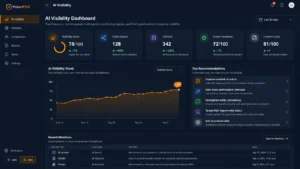
PulseWMS’s AI Visibility Monitoring for Agencies is designed around this ongoing operational use case rather than a one-off score.
14. Recheck after important website changes
Redesigns, migrations, content consolidation, URL changes, structured-data updates, and new product positioning can all affect discoverability. After important releases, verify that priority pages still resolve correctly, remain indexable, and retain their intended internal links and metadata.
This is where pre-launch and post-launch QA becomes part of the visibility workflow rather than a separate development task.
A simple agency workflow
- Identify the client’s most important topics, products, services, and questions.
- Confirm the technical foundation is crawlable and stable.
- Map each search intent to one strong primary page.
- Improve clarity, direct answers, evidence, and internal linking.
- Validate relevant structured data and brand information.
- Monitor search performance, AI referrals, mentions, and citations.
- Record changes and retest after major updates.
How to report AI-search readiness to clients
Keep client reporting grounded in evidence. Instead of promising that a page will be cited by a particular AI system, report the work completed and the observable signals: technical access, content improvements, tracked mentions, citation examples, referral sessions, and priority next steps.
Combine these findings with the wider client reporting workflow so AI-search observations sit alongside website health, SEO, performance, and other operational data.
Frequently asked questions
Is AI search optimization different from SEO?
There is overlap. Crawlability, clear content, internal linking, authority, structured data, and useful answers support both traditional search and AI-driven discovery. AI-search work adds monitoring for mentions, citations, prompt visibility, and AI referral traffic where available.
Can an agency guarantee AI citations?
No. AI systems decide which sources to use, and their outputs can change. Agencies can improve readiness and monitor outcomes, but they should not promise a guaranteed citation.
Does schema markup guarantee AI visibility?
No. Structured data can improve machine readability when it accurately describes the page, but it is only one signal among many.
How often should agencies review AI visibility?
For active campaigns, monthly monitoring is a practical starting point. Fast-moving brands or competitive topics may benefit from more frequent checks.
Final takeaway
AI-search readiness is strongest when it is treated as an extension of good website operations: technically accessible pages, clear answers, original evidence, consistent entities, strong internal linking, and ongoing monitoring. Build those foundations first, then track real AI visibility signals over time.